


Men looking for qualified support for any penile health or post‑op concern can explore our
Canadian Urology Directory and USA Urology Directory
to find clinics experienced in men’s urologic and dermatologic conditions.
Clinically reviewed by Melanie Dick, RN
Clinical U. Coordinator | Critical Care Nurse
Recovery insights & Post-op care expertise.
September, 2026

Tight Foreskin (Phimosis)
A tight foreskin (phimosis) is when the foreskin cannot be pulled back over the head of the penis; it’s usually normal in children but can cause pain, infections, and stress in teens and adults if it doesn’t resolve on its own. Phimosis simply means the foreskin opening is too tight to move comfortably over the glans. In childhood this is normal, but in teens and adults it can cause discomfort, infections, or difficulty with hygiene or sexual activity. Understanding why it happens helps you choose the safest path forward.

How Common is Phimosis in Adults?
Research suggests that roughly about 1% of adult men experience pathological phimosis. Most boys begin life with a non-retractable foreskin, but natural separation progresses through childhood and adolescence. By adulthood, only a small minority still meet criteria for true phimosis, typically due to scarring, inflammation, or chronic tightness rather than normal developmental non-retraction.
Adults With Phimosis vs. Total Adult Male Population (North America – Approximate)
~175–185M
~1–1.5M
Sources:
• Total Adult Male Population (~175–185M): U.S. Census Bureau and Statistics Canada demographic reports for adult males aged 18 and older.
• Adult Phimosis Prevalence (~1% / ~1–1.5M): Clinical epidemiological studies, including Øster (1968) and Morris et al. (2020), indicating a pathological phimosis prevalence rate of approximately 1% in late adolescent uncircumcised adult males.
Why the Foreskin Becomes Tight
In children, the foreskin simply has not separated yet; a normal biological process that usually resolves on its own. In teens and adults, inflammation, irritation, or scarring are more common causes. Repeated infections such as balanitis, micro‑tears from forceful retraction, or irritation from soaps and detergents can all reduce elasticity over time.
# Your Recovery Essentials
Explore Our Collection
Penile Treatment Recovery Briefs for a Softer Touch on Sensitive Skin.

Phimosis Stages (0–5 Classification)
This simple staging system can help describe how easily the foreskin retracts. It is not a formal diagnosis, but it can support clearer conversations with a doctor.
*Note: This simple staging system can help describe how easily the foreskin retracts. It is not a formal diagnosis, but it can support clearer conversations with a doctor.

Non‑Surgical Treatment Options
Most cases of phimosis, especially mild to moderate tightness, can be improved without surgery. These approaches focus on gradually increasing foreskin mobility, reducing inflammation, and restoring healthy tissue flexibility. When done correctly, non‑surgical treatment is safe, discreet, and often highly effective.


Stretching Exercises & Tools
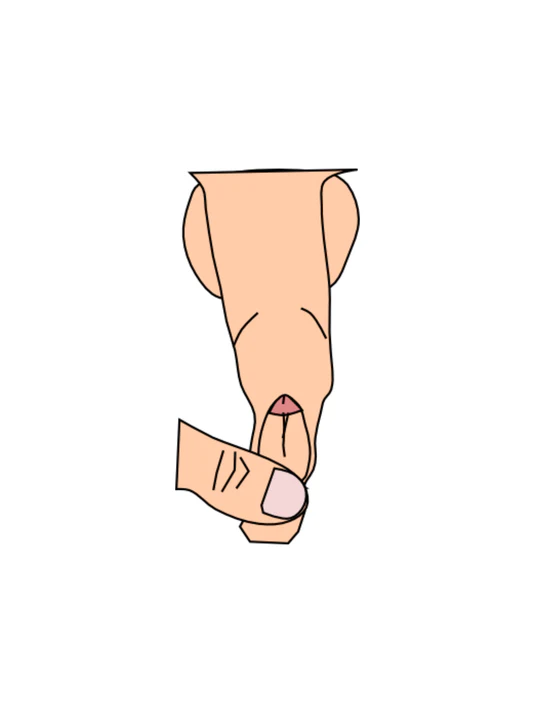
Foreskin Stretching Exercises

novoglan® Kit
Topical Creams
Topical corticosteroid creams are one of the most commonly used non‑surgical approaches for managing phimosis. These medications help soften the tight ring of foreskin tissue and reduce inflammation, which can make gentle stretching more effective. Commonly prescribed options include betamethasone 0.05%, hydrocortisone 1%, mometasone furoate, and triamcinolone. These creams are typically applied in a thin layer to the tight area once or twice daily, often alongside a stretching routine. When used consistently over a period of four to eight weeks, studies suggest that topical steroids can be effective for many individuals.
Topical Corticosteroid Potency Comparison
Topical corticosteroids vary widely in strength and are categorized into potency classes. Choosing the appropriate class depends on the severity of inflammation, treatment location, and delicate nature of the target tissue.
| Medication | Potency Class | Brand Names | General Purpose | Clinical Notes |
|---|---|---|---|---|
| Betamethasone Dipropionate 0.05% | Class 1 / 2 (Super-High to High) | Diprolene, Eleuphrat | Provides rapid control of severe inflammation, lichenification, and resistant skin lesions. | High-potency agent; typically reserved for short-term pulse therapy or thick, non-mucosal skin. |
| Mometasone Furoate 0.1% | Class 4 (Medium Potency) | Elocon, Asmanex | Effective anti-inflammatory treatment for moderate dermatoses and subacute inflammation. | Favorable safety profile; offers once-daily dosing with a lower risk of tissue atrophy than high-potency steroids. |
| Triamcinolone Acetonide 0.1% | Class 4 / 5 (Medium Potency) | Kenalog, Aristocort, Triderm | Widely used for mid-level inflammatory flare-ups, pruritus, and general eczema or dermatitis. | Common mid-range baseline steroid for body surfaces; available in various vehicles (ointment, cream, lotion). |
| Hydrocortisone 1% | Class 7 (Low Potency) | Cortizone-10, Anusol, Hytone | Provides mild symptom relief for sensitive skin areas, thin mucosal membranes, or long-term maintenance. | Lowest risk of skin thinning or systemic absorption; suitable for delicate tissue like the face or intertriginous folds. |
Betamethasone Dipropionate 0.05%
• Eleuphrat
Mometasone Furoate 0.1%
• Asmanex
Triamcinolone Acetonide 0.1%
• Aristocort
• Triderm
Hydrocortisone 1%
• Anusol
• Hytone
Hygiene
Improving daily hygiene can also play an important role in reducing symptoms. Washing gently with warm water, avoiding harsh soaps, and patting the area dry can help prevent irritation. It’s also important to avoid forceful retraction during cleaning, as this can cause micro‑tears and worsen tightness. Keeping the area clean and dry supports healing and helps prevent inflammation from recurring.
Inflammation Management
Managing inflammation is another key part of non‑surgical care. Conditions such as balanitis, posthitis, yeast infections, dermatitis, or irritation from aggressive cleaning can all contribute to tightness. Warm water soaks, avoiding irritants, and using protective ointments may help calm irritated skin. In some cases, antifungal creams may be recommended if a yeast infection is suspected. Reducing inflammation often improves foreskin mobility even before stretching begins.
Bottom Line
Non-surgical approaches work best as a primary option for mild-to-moderate tightness without significant scarring, severe frenulum breve, or lichen sclerosus (BXO). Progress depends on consistent daily care: gentle stretching paired with topical treatments typically reduces discomfort within 1 to 2 weeks, improves partial retraction by 3 to 4 weeks, yields noticeable structural progress between 6 and 8 weeks, and can enable full retraction after 8 to 12 weeks or longer.

Complications if Left Untreated
While most cases of phimosis resolve with gentle care, stretching, or medical treatment, long-term tightness can lead to secondary complications. Poor hygiene access under a non-retractable foreskin can cause recurrent inflammation of the glans or foreskin (balanitis and posthitis), which further worsens scarring and tightness. Additionally, a tight preputial ring can cause painful erections from tension and pulling, often affecting sexual confidence and leading to intimacy avoidance.
A very tight foreskin can occasionally trap itself behind the glans if retraction is forced, a situation known as paraphimosis. This is uncommon but requires prompt medical attention. Over time, repeated inflammation or micro‑tears may also contribute to scarring, which can make the foreskin less flexible.
The Emotional Toll of Recurring Infections
Recurring infections can affect more than physical comfort. They can disrupt intimacy, create anxiety around sexual contact, and strain relationships. Educational psychology discussions highlight that when intimacy becomes associated with fear of recurrence, couples may withdraw or avoid closeness altogether. This emotional weight often becomes the tipping point that leads men to seek medical advice after years of trying to manage the issue alone.

We undertsand that everyone’s issues can be particular and unique.

Talk to your doctor to see what treatment options are best for you.

There are large communities of men willing to share their experiences who share the same issues.
Phimosis & Sexual Health
Phimosis can impact both physical and emotional aspects of sexual wellbeing, causing discomfort, altered sensitivity, and anxiety during intimacy. Tightness often prevents smooth gliding over the glans, leading to reduced or uncomfortable sensation that can make people avoid intimate contact altogether. Fortunately, treatment (whether non-surgical or surgical) restores foreskin mobility and relieves pain, leading to greater confidence, natural movement, and improved body image and communication.
Phimosis Myths & Misconceptions
Misconceptions about phimosis often cause unnecessary fear, but clearing up these myths helps people make informed decisions about their bodies. Contrary to popular belief, phimosis does not automatically require circumcision, as non-surgical approaches like stretching routines, topical treatments, and managing inflammation are frequently effective. Forcefully retracting a tight foreskin should never be attempted, as this causes micro-tears and scarring that actually worsen symptoms. Additionally, while foreskin tightness is a normal part of childhood development, phimosis can also affect adults due to scarring, irritation, or underlying inflammation. Understanding these distinctions reduces stigma and empowers individuals to seek proper care rather than relying on outdated or harmful advice.
Support That Solves Real Recovery Problems
Post-op recovery comes with predictable frustrations: catching stitches, sharp fabric contact, disrupted sleep, and bulky, improvised protection. Catchfords removes those daily frictions. Its NonFriction™ textiles create a smooth, low-resistance interior that prevents glans irritation and lets the area glide gently without tugging on stitches. A cushioned inner layer buffers shifts in position for more restful sleep during the most sensitive nights. Designed to replace awkward cups and wraps, its low-profile fit provides invisible, bulge-free relief under clothing, helping restore full mobility whiel remaining discreet.


🩲 The Role of Underwear in Recovery
It may seem trivial, but underwear choice can make or break the recovery experience. The penis is highly sensitive after surgery, and friction from clothing can cause pain or delay healing.
Snug briefs provide support, keeping the penis upright and reducing swelling. Breathable fabrics prevent moisture buildup, which lowers the risk of infection. Anti‑friction designs protect sensitive skin from rubbing.
Catchfords Recovery Briefs were designed specifically for this stage. They combine discreet support with anti‑friction technology, helping men feel comfortable during recovery while protecting sensitive skin. For many, they become an essential part of the healing journey.
The “Recovery” jock strap underwear in the market today rely on hard plastic cups that were never designed for recovery. Every movement is potential to make contect with the sensitive glans, turning each step into wincing pain rather than protection. And because the rigid cup protrudes, it can’t be worn discreetly under regular pants — it creates an obvious, embarrassing bulge at the crotch. For men in recovery, this isn’t support at all; it’s a crude contraption, more like a “Franken‑Cup” than a piece of dignified underwear.
FAQ
Is phimosis normal?
Phimosis is normal in children and usually resolves naturally between ages 6 and 13. In adults, persistent tightness is less common and is often caused by inflammation, irritation, or scarring rather than normal development.
Can phimosis go away on its own?
In children, yes. In teens and adults, phimosis usually does not resolve without treatment. Steroid creams and gentle stretching are often effective.
Does phimosis always require circumcision?
No. Many adults improve with non‑surgical treatments. Circumcision is typically reserved for severe cases or when conservative treatments don’t work. Preputioplasty is a less invasive option that preserves the foreskin.
How long does stretching take to work?
Stretching usually takes several weeks. Progress should be slow and gentle — forcing the foreskin can cause micro‑tears and make the tightness worse.
Is phimosis painful?
Mild phimosis may cause little discomfort. More severe tightness can lead to pain during erections, irritation, or difficulty urinating, especially if inflammation is present.
Can phimosis affect sexual activity?
Yes. Tightness can cause pain during erections or penetration, reduce comfort, and create stress around sexual activity. Treatment often improves both comfort and confidence.
When should I see a doctor?
You should seek medical advice if you experience pain, cracking, swelling, recurrent infections, difficulty urinating, or if the foreskin becomes stuck behind the glans (paraphimosis). Paraphimosis is a medical emergency.


